
Eight layers of fail-safe

Beyond endurance, payload and mission specs, what sets ICS aircraft apart are the systems our engineers built to handle what really goes wrong in flight: a failing component, bad weather, or navigation signals being jammed. Each situation is planned for in advance and handled automatically.

Eight safety layers

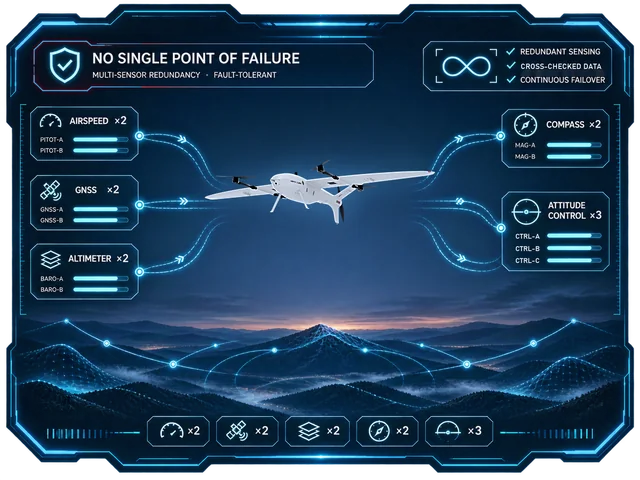
  1. No single point of failure

    Every critical sensor (airspeed, GNSS, altimeter, compass) has at least two units and the attitude controller has three. If one sensor drifts, the aircraft keeps flying normally.

    Technical detailRedundant sensors & controllers: ≥2× airspeed, GNSS, altimeter, compass; 3× attitude controllers
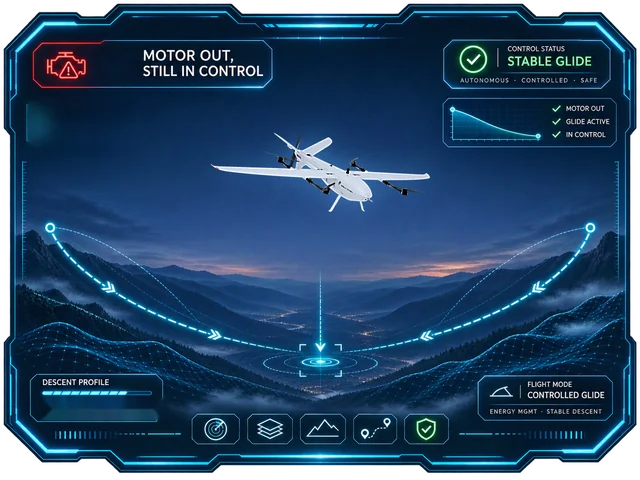
  2. Motor out, still in control

    If the cruise motor fails, the aircraft does not drop or flip. It glides down under control, like a light aircraft with its engine out.

    Technical detailThrust-loss glide
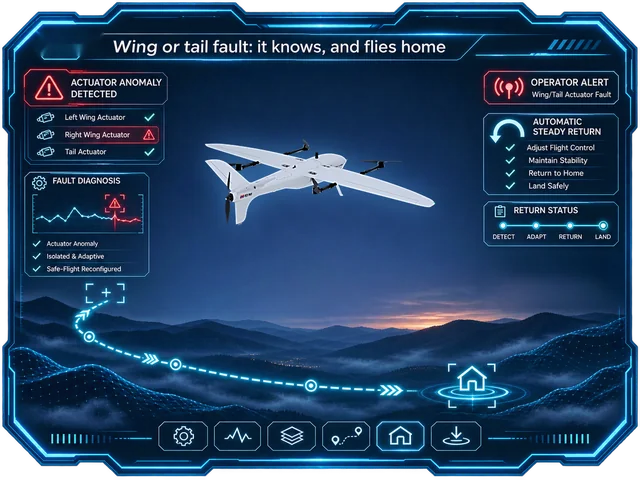
  3. Wing or tail fault: it knows, and flies home

    When a wing or tail actuator starts misbehaving, the aircraft alerts the operator and returns to land automatically, with ICS-developed control logic keeping it as steady as possible on the way.

    Technical detailServo fault detection with ICS fault-tolerant control algorithm
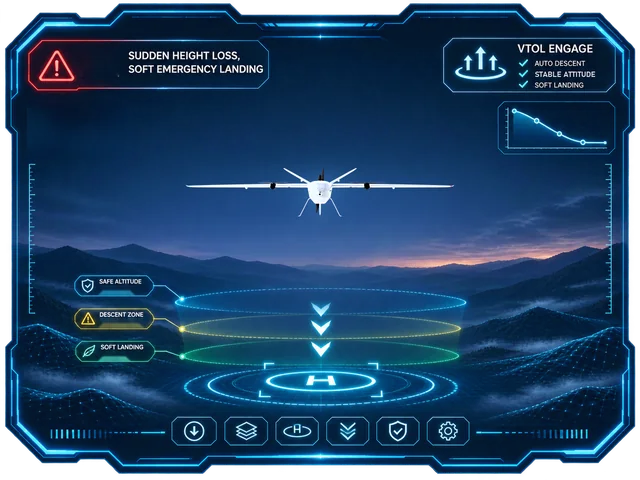
  4. Sudden height loss, soft emergency landing

    As a hybrid VTOL it already carries four lift motors. If it loses height suddenly for any reason, they engage automatically at a preset safety altitude and lower the aircraft gently instead of letting it hit the ground.

    Technical detailHybrid emergency VTOL recovery
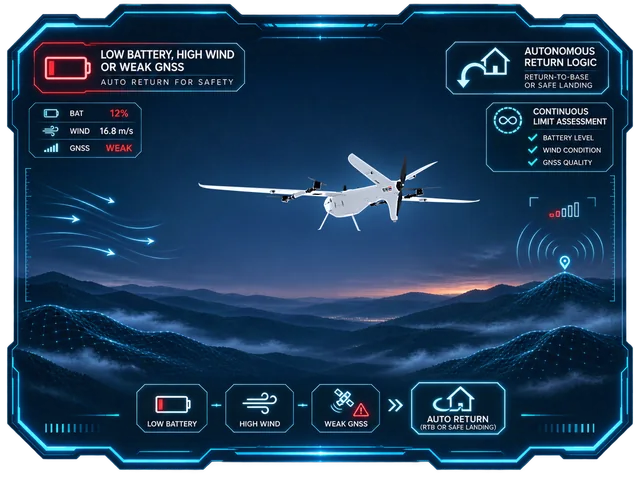
  5. Low battery, high wind or weak GNSS: it comes home on its own

    The aircraft assesses battery, wind and navigation continuously, and returns to base or to a pre-planned safe landing point as soon as any of them goes out of limits, without waiting for the operator to notice.

    Technical detailAuto return with continuous battery, wind and navigation assessment
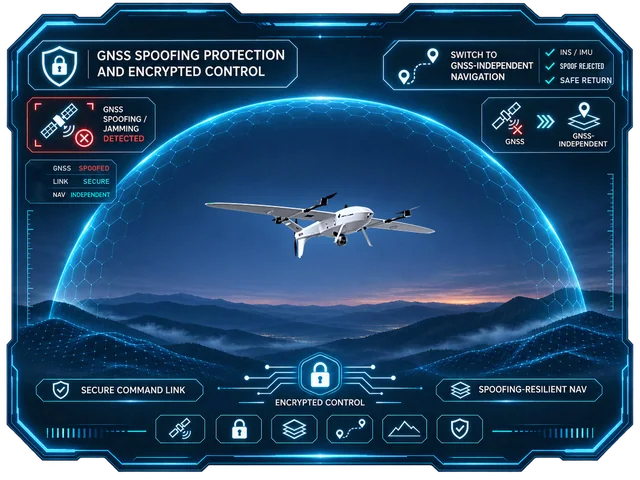
  6. GNSS spoofing protection and encrypted control

    Where GNSS is jammed or spoofed, the aircraft detects it early and turns back before losing control; if GNSS is lost it still has a GNSS-independent way home. Every command is encrypted, and the aircraft accepts commands only from registered stations.

    Technical detailAnti-jamming & secure link: early spoofing detection, GNSS-independent return navigation, encrypted command link with registered-station authentication
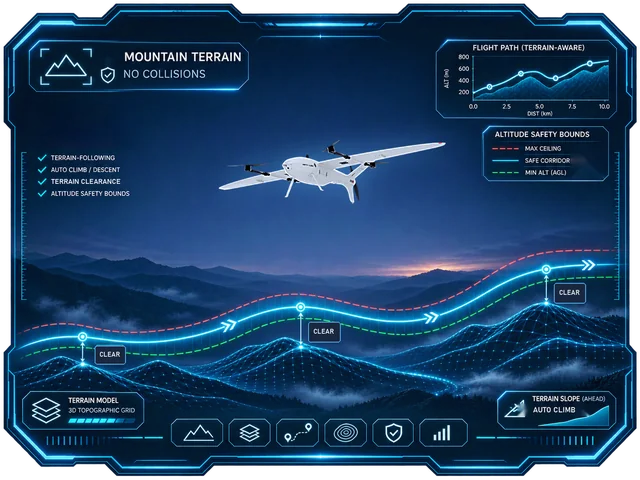
  7. Mountain terrain, no collisions

    The aircraft knows the terrain height along its whole route and climbs over hills and mountains automatically, so it keeps a safe height above the ground all the way.

    Technical detailTerrain awareness / terrain following
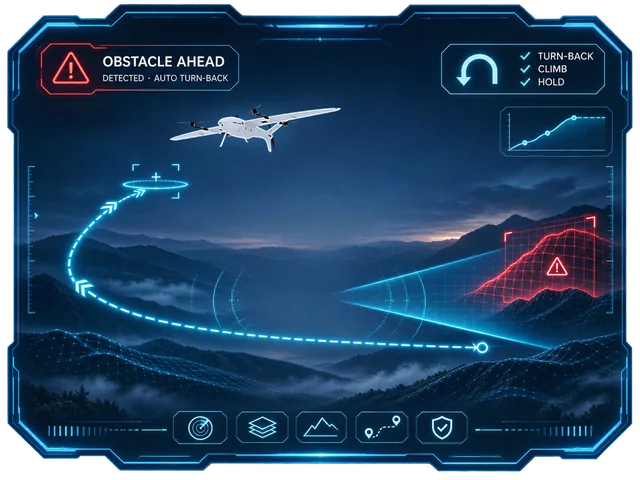
  8. Obstacle ahead: it turns back

    A forward laser watches the path. If something blocks it, the aircraft warns the operator, turns back along its route and holds in clear air until the pilot decides.

    Technical detailForward laser obstacle sensing, turn-back escape
  9. More layers on the way

    Our team keeps building new safety functions. Each one is added here once it has passed testing.

Applies to the ICS VTOL fixed-wing line: Avix GN220 · Vertix VL260 · Vilverin VL340 · Xtrix VL390

Flight automation

Not fail-safes, but they make real work easier and more precise.

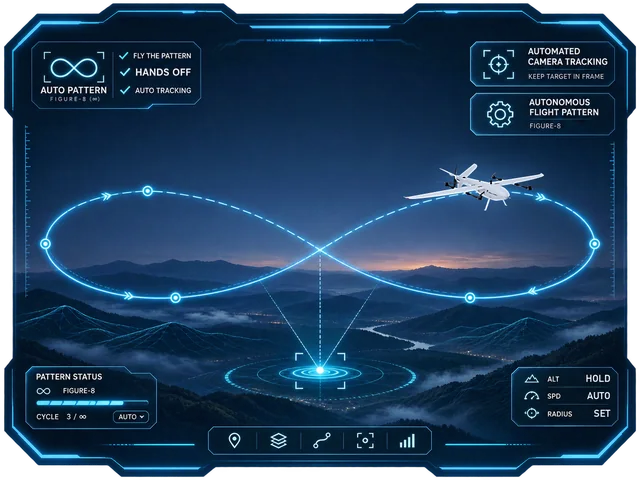
  1. Fly the pattern, hands off

    Pick a figure-8 over a point of interest on the ground station, and the aircraft flies it automatically and keeps the target in view.

    Technical detailAutomatic flight patterns

Return to launch along a defined landing path

Onboard camera on a Vilverin VL340 during testing: in RTL mode the aircraft flies back along the planned path, then switches to VTOL for a vertical landing.

Reliability is built, not claimed

Before any real mission, every part is tested: wings under loads beyond real flight, servo endurance, motor performance, and tap tests that measure how the structure vibrates, and the results are used to calculate that the wings stay steady from cruise up to the structural speed limit (VNE). The data feeds wear analysis and a predictive-maintenance plan, the foundation of airworthiness: not just flying, but flying predictably within defined limits.

  • Made in Thailand
  • dSURE hardware Safety by depa

Standard tests passed

Run on every ICS aircraft model

  • Wing Loading Test
  • Radiated Immunity Test (EMC)
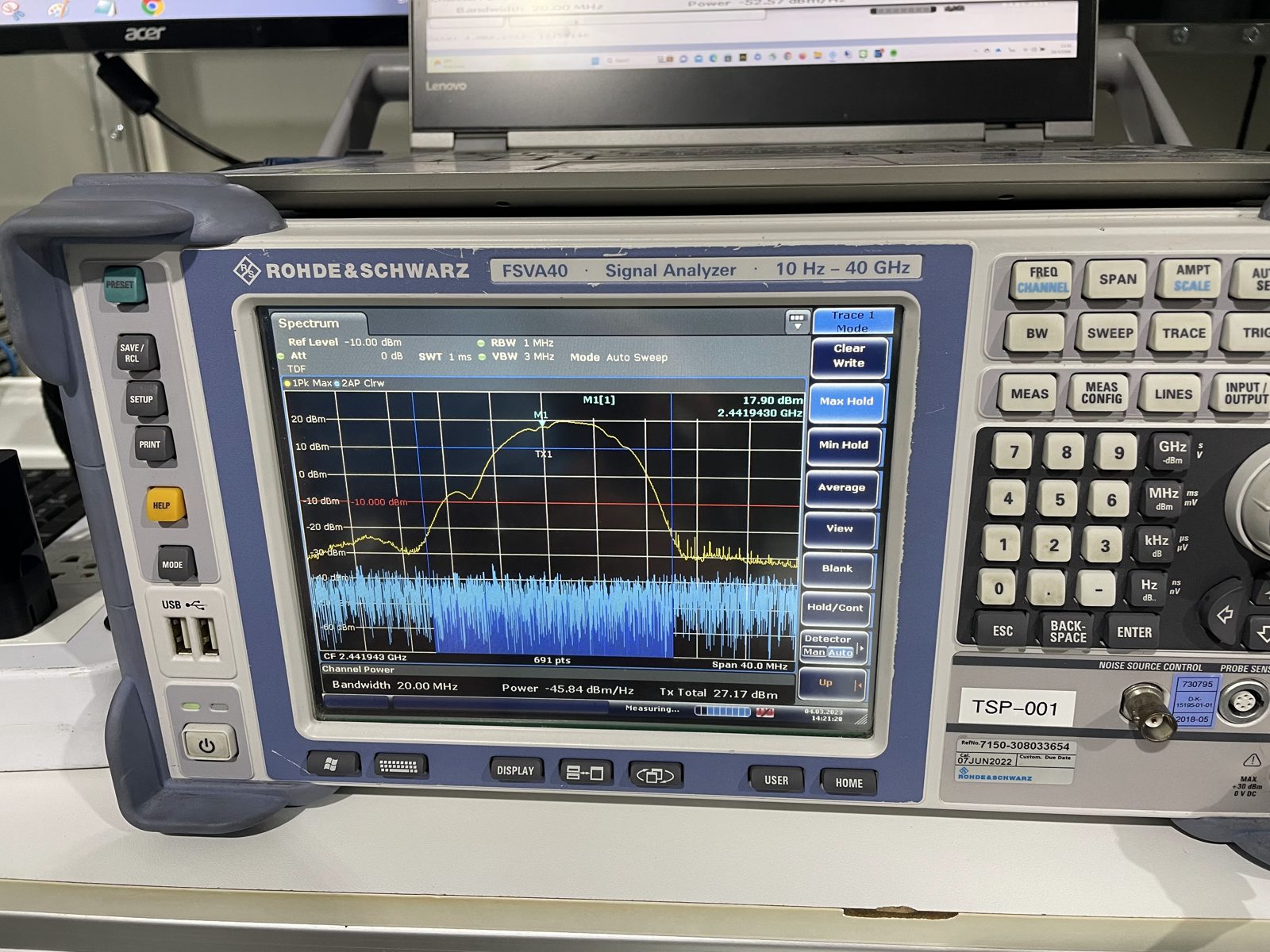
  • Conducted Emission Test (EMI)
  • Structure Durability Test

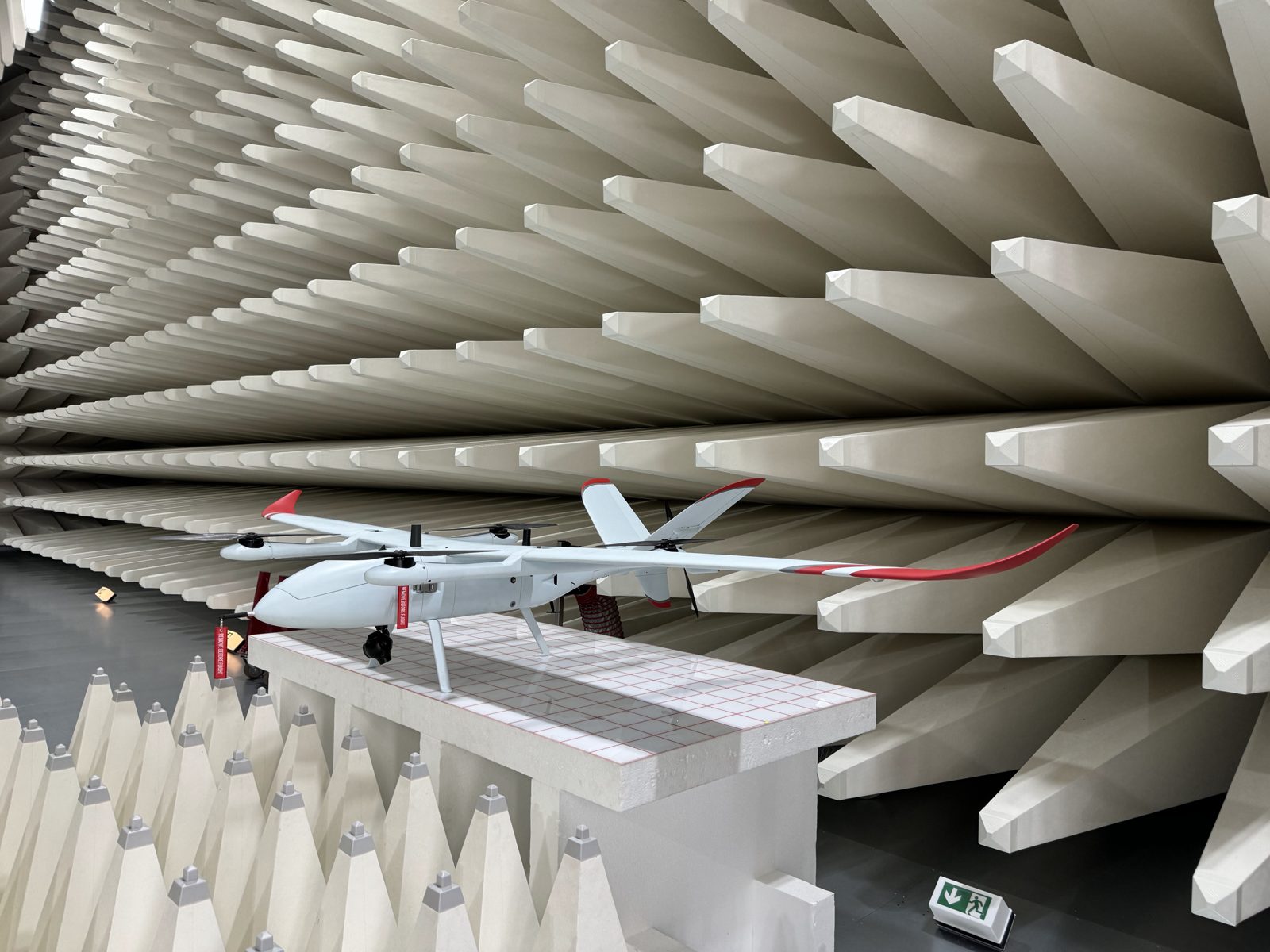
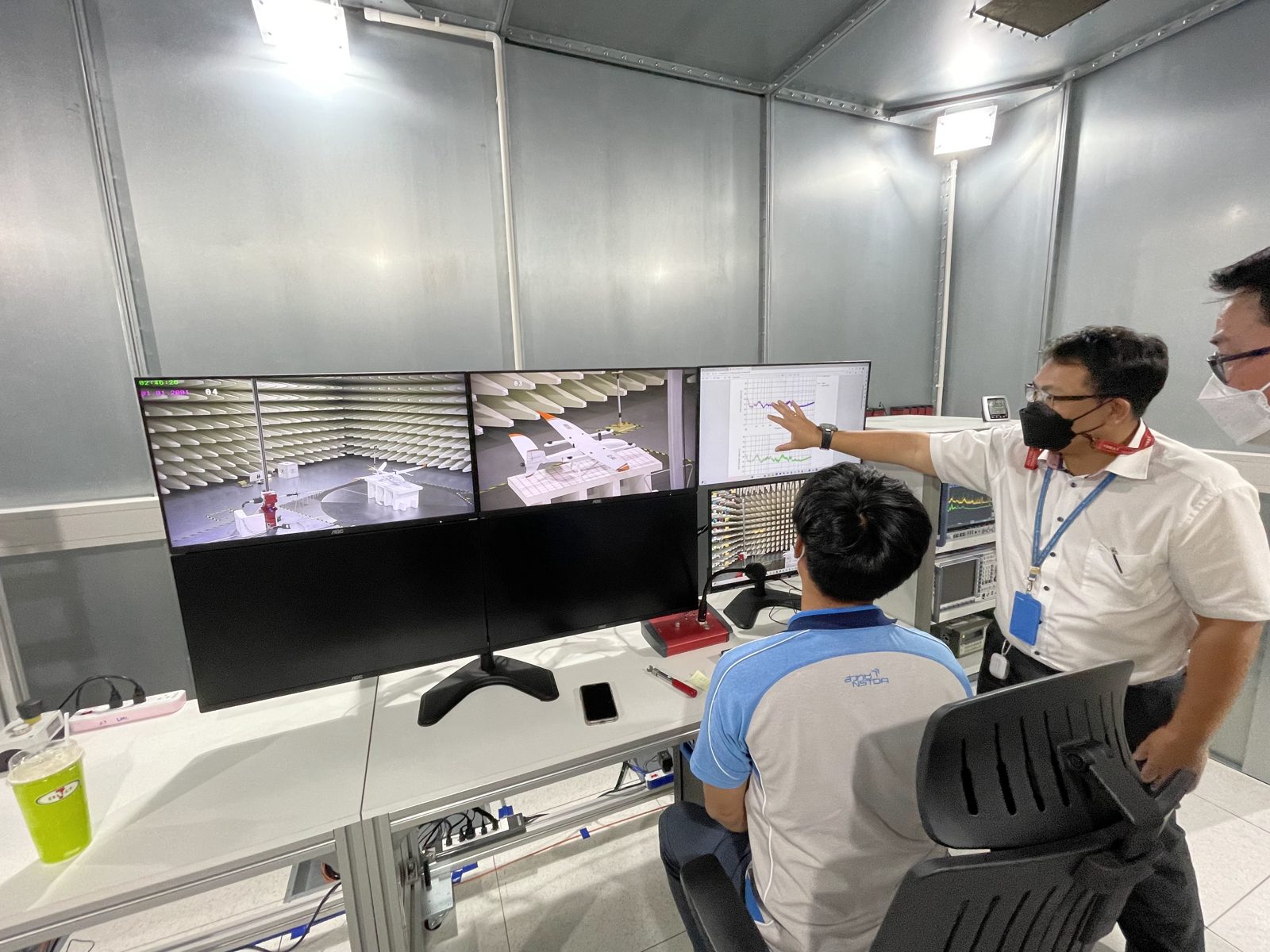
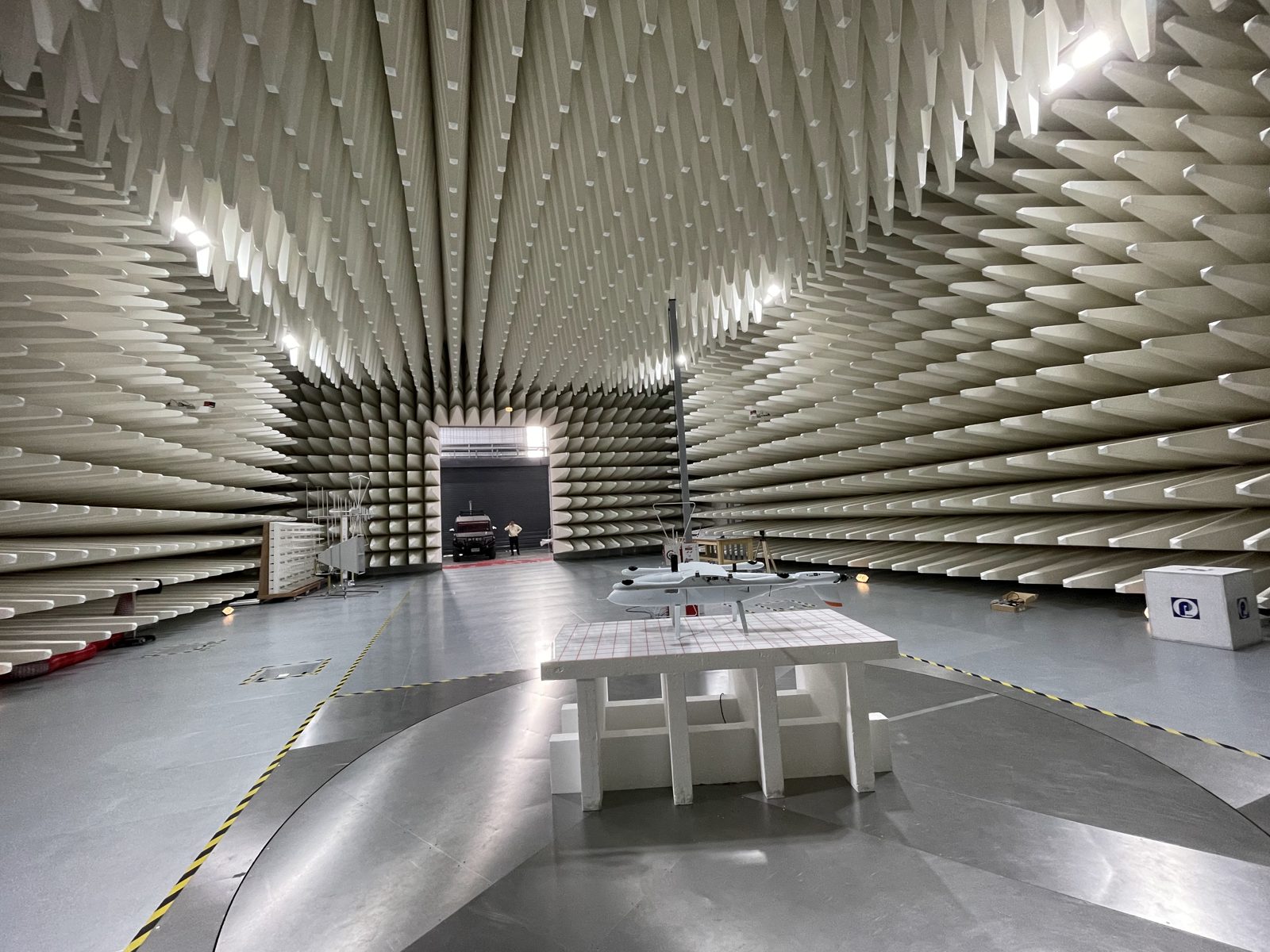
EMC and EMI tests in the anechoic chambers at PTEC, the Electrical and Electronic Products Testing Center

Wing load test: sandbags spread along the span
Wing servo life-cycle test: the control surface cycled on the bench
Independent lab results

Reliability and safety are
the heart of every ICS drone

That is why we test beyond what drone registration requires. Both material samples and complete aircraft go to independent labs for testing to international standards.

  • Whole aircraft2.5–3hMotor held locked for this long. It stops by itself, undamaged, with no hazard.
  • Fuselage skin250NPressed for 5 seconds. The fuselage skin was not damaged.
  • Fuselage skin70°C · 7 hHeated in an oven for this time with no warping, cracking or shrinkage.
  • IEC 62368-1:2018NSTDA PTEC
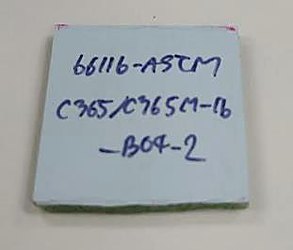
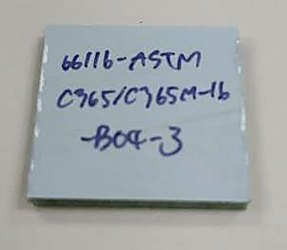
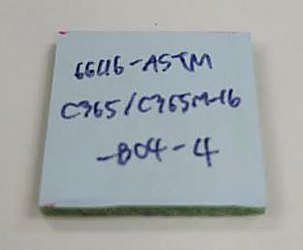
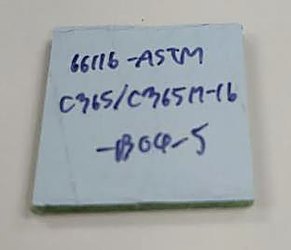
  • ASTM C365GALAXI / GISTDA
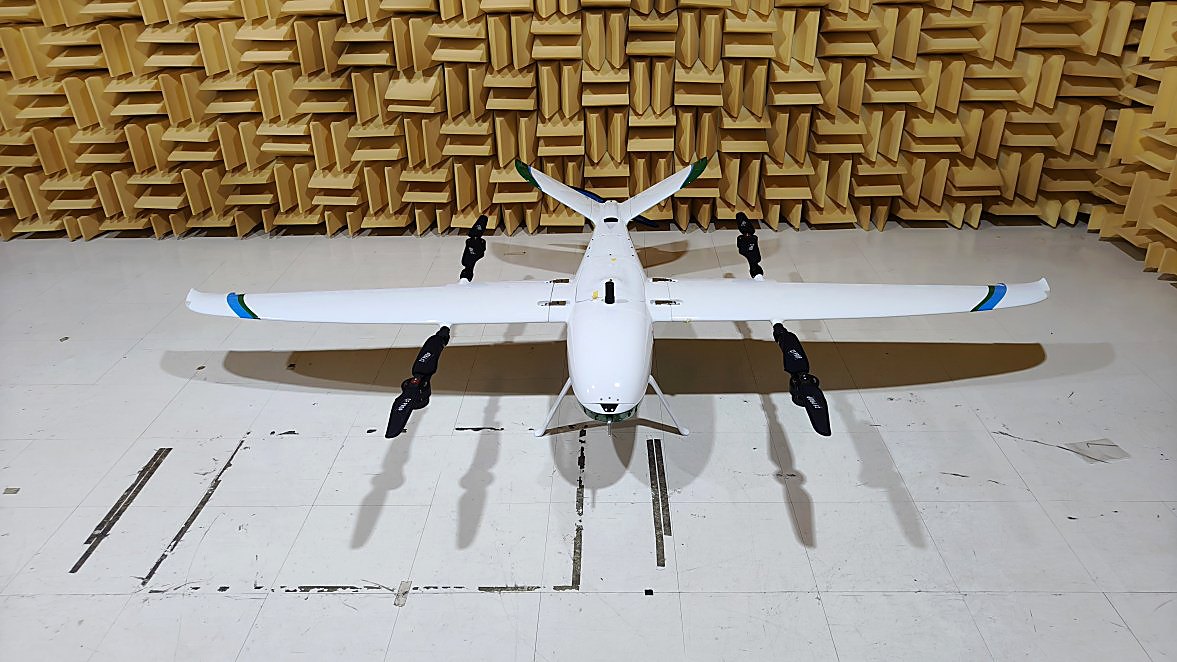
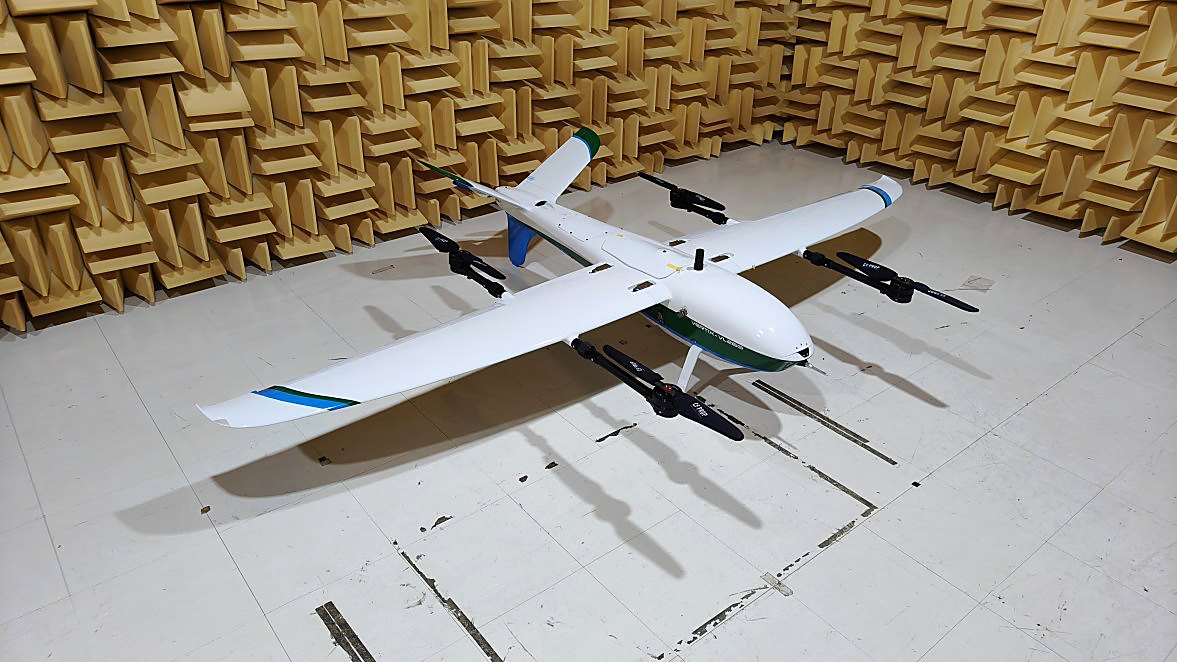
The Vertix VL260 in the test chamber
ICS Vertix VL260
Aircraft submitted for testing
Whole aircraft · Vertix VL260

A complete aircraft sent to the lab for safety testing

Checked for electrical, heat, fire, battery and fuselage-skin safety to IEC 62368-1:2018. The lab report concludes that the aircraft submitted complies with the requirements of this standard.

NSTDA PTEC

Good to know · IEC 62368-1

What it is
An international safety standard for electronic equipment. It looks at the energy sources inside a product (electrical, heat and mechanical) and asks whether they could injure someone or start a fire, and whether the safeguards are enough.
How it helps a UAV
A drone packs a battery, motors and high-power controllers into one airframe. This testing shows, before delivery, whether the aircraft could overheat, catch fire or become hazardous when a motor locks.
Why customers can trust it
An independent lab did the testing, not ICS, and the result is recorded in a numbered report.
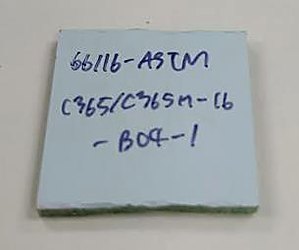
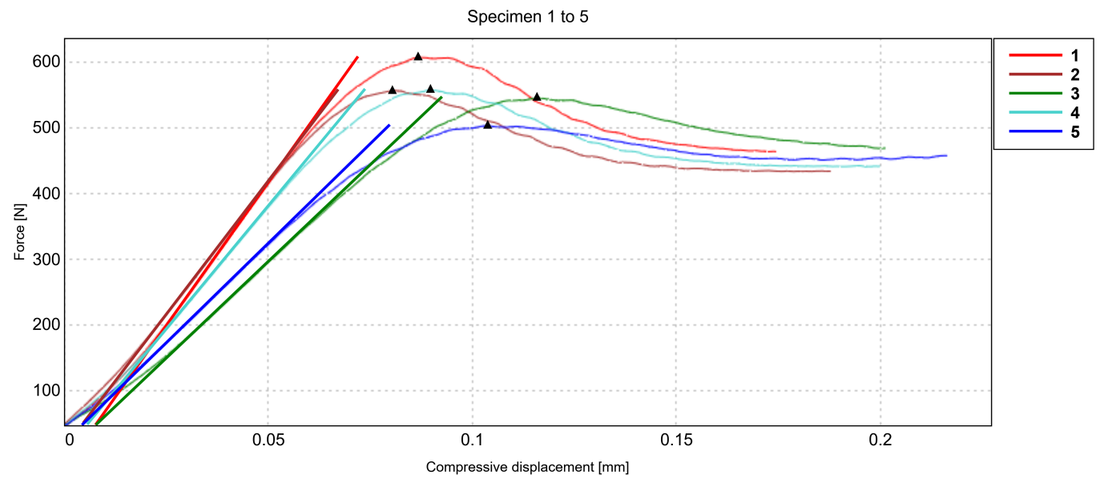
Force against compression for the five test specimens
Structural core material · ASTM C365
GALAXI (GISTDA)

Good to know · ASTM C365

What it is
A standard test method from ASTM International. It measures how much compressive load the core of a sandwich structure (thin skins either side of a light core) can take, perpendicular to the skins, before it crushes.
How it helps a UAV
Sandwich structures keep parts light yet stiff. Knowing the real compressive strength of the core lets materials and thickness be chosen from data instead of guesswork.
Why customers can trust it
Tested at the GALAXI lab of GISTDA on a compression testing machine, one specimen at a time, with the result for every specimen shown in the graph.

Results apply to the samples submitted for testing. They are not a quality certificate.